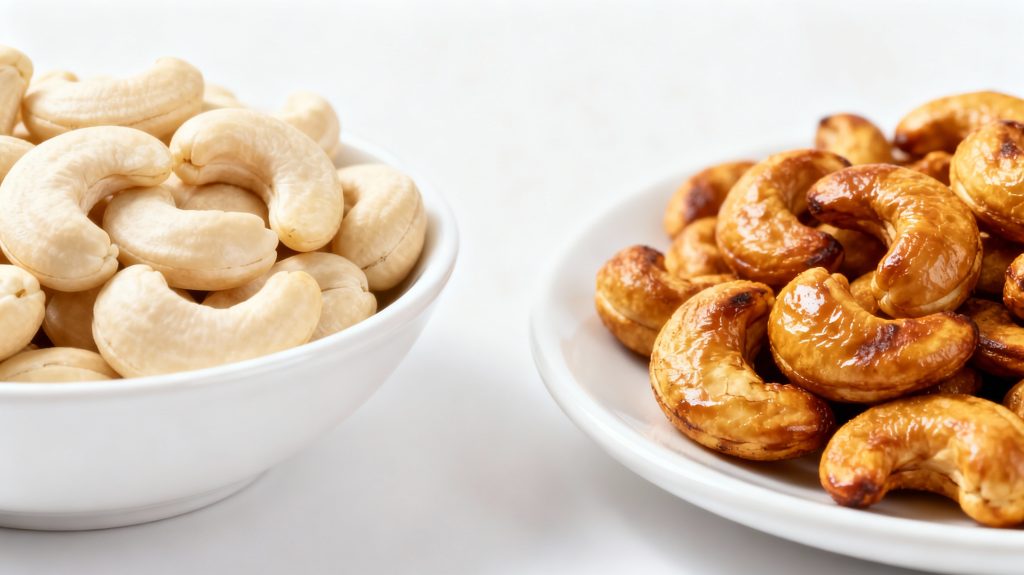
Cashew nuts, known for their rich texture and nutty flavor, are a popular snack enjoyed by many. But when it comes to choosing between raw and roasted cashews, which one is the better option for your health? Both raw and roasted cashews offer distinct benefits, and understanding their differences can help you make an informed choice based on your nutritional needs.
In this article, we’ll compare raw and roasted cashews, exploring their nutritional differences, health benefits, and how the roasting process impacts their flavor, texture, and nutritional value.
1. Nutritional Differences Between Raw and Roasted Cashews
While both raw and roasted cashews are nutritious, the roasting process can have an impact on the cashew’s nutrient content. Here’s a breakdown of the key differences:
a. Raw Cashews
Raw cashews are the natural form of the nut, straight from the cashew apple, before they undergo any roasting or processing. Raw cashews are usually unprocessed and contain no added oils, preservatives, or flavorings. They retain the full amount of vitamins and minerals they naturally contain.
- Nutritional Benefits:
- Higher Enzyme Content: Raw cashews contain natural enzymes that can aid digestion and help the body absorb nutrients more effectively.
- Rich in Antioxidants: Raw cashews are high in vitamin E and selenium, both of which help protect your body from oxidative stress.
- Minimal Processing: Raw cashews are closer to their natural state, which preserves their nutritional integrity, including healthy fats, fiber, and protein.
b. Roasted Cashews
Roasting cashews brings out their rich, roasted flavor and enhances their crunchiness, but it can affect their nutrient content. Roasting nuts at high temperatures can result in the loss of certain heat-sensitive nutrients, such as vitamin C and some B vitamins. However, the nutritional loss is relatively minimal when roasting at lower temperatures.
- Nutritional Benefits:
- Enhanced Flavor: Roasting cashews can enhance their taste and texture, making them more enjoyable for those who prefer a crispy and savory snack.
- Increased Digestibility: Roasting cashews can make them easier to digest for some people by breaking down the nut’s tough cell walls.
- No Nutrient Loss in Moderation: When roasted at a moderate temperature, roasted cashews still retain most of their nutritional content, including healthy fats, fiber, protein, and minerals like magnesium and zinc.
2. Impact on Healthy Fats
Cashews are known for their healthy fats, particularly monounsaturated and polyunsaturated fats, which help reduce LDL cholesterol (bad cholesterol) and promote HDL cholesterol (good cholesterol). Both raw and roasted cashews contain these healthy fats, but the roasting process can slightly change their structure.
- Raw Cashews: Retain their natural, unaltered fat composition, which is beneficial for heart health and overall wellness.
- Roasted Cashews: While roasting may lead to some minimal changes in the fat structure, the nuts still retain their heart-healthy fat content, especially when roasted at low temperatures without excessive oils.
3. Effects of Roasting on Antioxidants
Antioxidants are compounds that protect the body from damage caused by free radicals, which can lead to chronic diseases. Both raw and roasted cashews contain antioxidants, but the roasting process can decrease the antioxidant content, particularly vitamin E and selenium.
- Raw Cashews: They retain more antioxidants, such as vitamin E, which helps protect cells from oxidative stress and damage.
- Roasted Cashews: Roasting at high temperatures can cause a slight reduction in antioxidants. However, roasting at moderate temperatures may still preserve many of the nut’s antioxidant properties.
4. Health Benefits of Raw Cashews
While both raw and roasted cashews offer similar nutritional profiles, raw cashews have specific health benefits that make them an excellent choice for those looking for a minimally processed snack.
a. More Enzymes for Digestion
Raw cashews are rich in enzymes that support the digestion and absorption of nutrients. These enzymes can help break down proteins and fats more effectively, making them a great choice for people who prioritize digestion and overall gut health.
b. Richer in B Vitamins
Raw cashews are naturally high in B vitamins, such as vitamin B6 and folate, which are important for energy production, brain health, and the formation of red blood cells. Roasting may reduce the levels of some B vitamins, especially vitamin B1 (thiamine).
c. Higher Mineral Content
Raw cashews retain more of their natural mineral content, particularly magnesium, zinc, and iron, which are important for bone health, immune function, and oxygen transport in the body.
5. Health Benefits of Roasted Cashews
Roasting cashews brings out their distinct flavor and makes them more enjoyable for many people. While the roasting process may slightly reduce certain nutrients, roasted cashews still offer health benefits.
a. Enhanced Taste and Texture
The roasting process enhances the flavor and crunch of cashews, making them a more enjoyable snack for those who prefer a deeper, savory taste. The crispy texture is perfect for adding to salads, stir-fries, or enjoying as a stand-alone snack.
b. Easier to Digest
Roasting can break down the cell walls of cashews, making them easier to digest for some people. This can help those with sensitive stomachs or digestive issues benefit from cashews without feeling discomfort.
c. Rich in Minerals
Roasted cashews still provide essential minerals like magnesium, iron, and zinc, which are important for overall health and well-being. They also provide a good source of protein and fiber, promoting heart health and digestive health.
6. Which Is Healthier: Raw or Roasted Cashews?
Both raw and roasted cashews offer significant nutritional benefits, but raw cashews have the edge when it comes to preserving more vitamins, minerals, and antioxidants. However, roasted cashews have their own advantages, including a more enjoyable taste and improved digestibility for some individuals.
If you’re looking for a snack that retains the most nutrients and is as close to its natural state as possible, raw cashews are your best option. On the other hand, if you enjoy a crispy, roasted flavor and find them easier to digest, roasted cashews remain a healthy choice.
Conclusion: Raw or Roasted Cashews – The Best Choice for You
Ultimately, the choice between raw and roasted cashews comes down to personal preference and your specific health goals. Both options provide essential healthy fats, protein, and fiber, and both can be included in a balanced diet to support heart health, bone strength, and overall well-being.
Whether you choose raw or roasted cashews, adding them to your diet is a great way to improve your nutrition and enjoy a delicious, nutrient-packed snack. So, choose the cashews that fit your taste and health goals and enjoy the many benefits they have to offer!